Noise, litter, and nuisance
Information on managing noise, litter, and other community nuisances.
What is the City doing to reduce mosquitoes?
The City, in partnership with the Peel Mosquito Management Group and WA Department of Health delivers the largest mosquito management program in Western Australia. The programs main focus is to reduce the public health and nuisance impacts on our community from saltmarsh mosquitoes that breed within the vast estuarine wetlands throughout the City and greater Peel region.
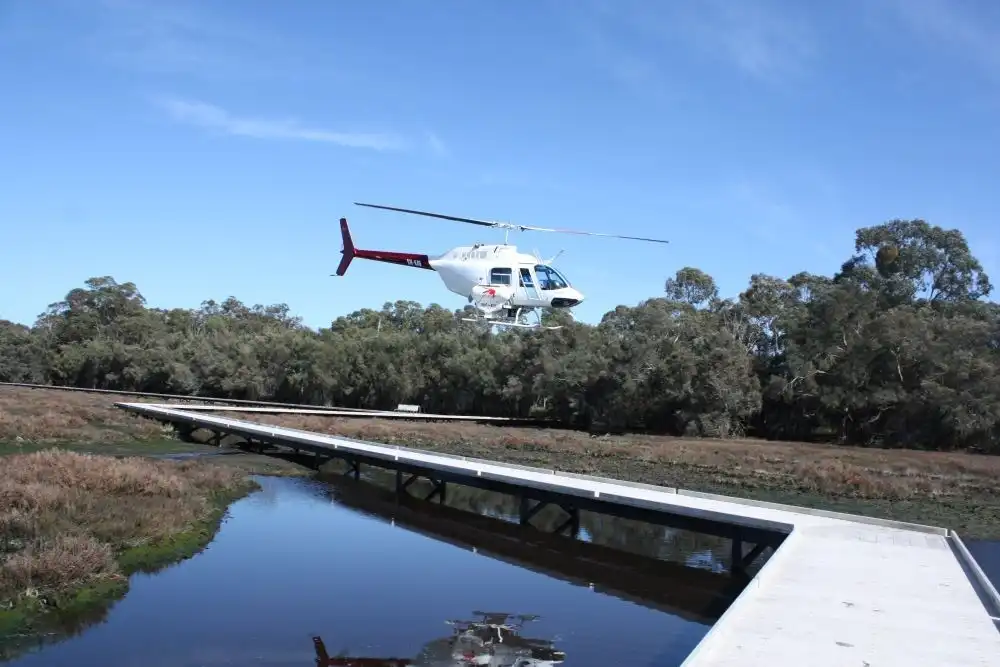
This is achieved by using a specially-equipped helicopter to apply larvicide to mosquito breeding sites. The larvicides we use, have been specifically developed to only target mosquito larvae and prevent their further development into adult mosquitoes. The helicopter treatments are carried out year-round to respond to environmental triggers of mosquito breeding and ensure our community is protected as best possible.
Last treatment: 2 and 3 April 2026 – 387.8 hectares
Next treatment: The date of the next planned treatment will be provided here.
Here are the recent treatments for the season - we will update following each treatment:
Protecting you and your family
Mosquitoes are part of our natural environment and are active all year round. Whilst year-round mosquito reduction treatments take place, it is not realistic to rely on these alone to offer total protection from mosquitoes.
Protecting yourself and your family members from mosquito bites and mosquito-borne disease is a lifestyle necessity in the Peel Region.
Whilst the peak in mosquito activity will be around dawn, late afternoon and dusk, mosquitoes can be active throughout the day and night. Calm, humid and unstable weather conditions can also enable mosquitoes to become more active.
The best way to protect yourself is to:
Larvicides are a type of insecticide that kill or disrupt the development of mosquito larvae, resulting in death before the adult can emerge. Some larvicides are activated when eaten by the larvae, and some types work when they come into contact with larvae.
The two types of larvicides used are S - methoprene which is an Insect Growth Regulator and Bti - Bacillus thuringiensis israelensis, a naturally occurring bacterium found in soils.
These are the most environmentally appropriate larvicides currently available and are approved by the Australian Pesticides and Veterinary Medicines Authority, and supported by the WA Department of Health, for broadscale mosquito management.
Importantly, these larvicides pose no adverse effects to other non-target organisms or members of the public.
Ross River virus and Barmah Forest virus are the most common in the Peel Region. Symptoms include joint pain, muscle soreness, rash, and fatigue. Peak risk is September to January. See a doctor for a blood test if you suspect infection. More on the WA Health website.
The City’s mosquito management program is very successful in reducing mosquito populations in a consistent, reliable and environmentally sustainable way.
However, eliminating mosquitoes is unrealistic due to the large breeding areas (up to 600 hectares) and the ability of mosquitoes to reproduce in vast numbers within short time frames.
This means even with our treatment program in place, there will be a percentage of mosquitoes that evade treatment and continue to reproduce.
If the program was not in place, saltmarsh mosquitoes would be in extreme and persistent numbers throughout the year.
Yes, however saltmarsh mosquito larvae hatch in such vast numbers that virtually no real beneficial reduction happens from natural predators. One small breeding site can support millions of larvae and produce consecutive generations over a short time frame.
In suburban environments and some natural environments, introducing native fish can be effective in keeping freshwater mosquitoes under control in some situations but is limited in sensitive environments.
Feeding on adult mosquitoes also occurs by animals such as micro bats but again this has little effect on the overall mosquito population as mosquitoes only make up a small part of their food sources.
Relying on plants that are promoted as having a mosquito repelling effect around the home is not recommended.
Many residential areas are located close to mosquito breeding sites throughout Mandurah and the Peel Region. This, and a number of other factors will result in certain residential areas experiencing higher and more persistent mosquito activity.
In years when environmental conditions make mosquito reduction efforts difficult, mosquito numbers and activity will be higher and mosquitoes will disperse throughout most suburbs due to their ability to fly many kilometres from the breeding sites.
Even with our proactive program total eradication is not possible or environmentally desirable.
This means mosquitoes are always around, however their numbers and activity levels will constantly change.
Not all mosquitoes come from the large estuarine breeding sites the City treats. Some species — including the common 'backyard mosquito' — breed in small amounts of standing water right on your property, and can still transmit Ross River virus and Barmah Forest virus.
Check and empty these every few days:
The City does not carry out treatments on private property, however if you have a potential breeding source (a stagnant / body of water) on your or a neighbouring property, you can contact the City and request a site inspection. Property owners are responsible for complying with local laws to deter mosquito breeding.
There are a number of steps you can take to help deter mosquito breeding and also stop mosquitoes and other flying insects like midge from entering your home and property.
Useful documents
Information on managing noise, litter, and other community nuisances.
Support and information to help improve health, wellbeing, and lifestyle choices.
Information and services that protect community health, including food safety, environmental health standards, and recreational water testing.